
How Much Income Do I Need to Buy an $800,000 Property?
The honest arithmetic at NSW's most consequential price: the deposit, the buffered repayment, and the income range with every caveat visible.
 Charles Touma
Updated
6 min read
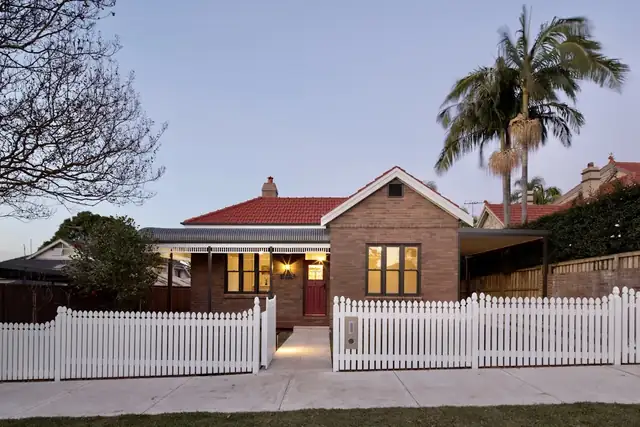
$800,000 is the most meaningful price in NSW for a first home buyer: roughly where Sydney apartments and some townhouses trade, and exactly where the stamp duty exemption ends. So what household income does an $800,000 purchase actually take? Here is the honest arithmetic, with every assumption visible.
Why start with the loan, not the income?
The income question is really a repayment question in disguise. With the 5% deposit scheme, the deposit is $40,000 and the loan about $760,000. With a 20% deposit, $160,000 down, the loan is $640,000. Those two loans have very different monthly costs, which is why "what income do I need" has no single answer, it depends first on your deposit pathway.
What are the repayments, and how does the buffer apply?
At recent rates, a $760,000 loan over 30 years means repayments in the mid-$4,000s a month; a $640,000 loan sits meaningfully lower. But lenders do not assess you at the actual rate: they add a buffer of roughly 3 percentage points and test whether your budget survives the higher figure. That buffered repayment, not the advertised one, is the hurdle your income must clear, run both views in the repayments calculator to see the gap.
What income range does $800,000 need?
As a broad indication only: households supporting a scheme-sized loan around $760,000 typically earn somewhere in the $130,000 to $160,000 range before tax. With a 20% deposit and the smaller loan, the range drops accordingly. Treat these as compass bearings, not rules, the true figure for you moves substantially with:
- Debts and card limits. A car loan and a $15,000 card limit can shift required income by tens of thousands.
- HECS/HELP. Repayments scale with income and reduce capacity; the HECS guide covers by how much and what helps.
- Dependants and household size, expense benchmarks scale with both.
- Income type. Base salary counts in full; overtime, allowances and casual earnings are averaged or discounted differently by different lenders, see the overtime and allowances guide.
- One income or two. Couples reach the range far more easily; buying with a partner has its own planning questions.
What does $800,000 not cost a first home buyer?
At this price an eligible first home buyer pays no stamp duty in NSW, and under the scheme, no LMI. The cash needed is the deposit plus ordinary buying costs, itemised in the complete $800,000 worked example, which is the companion piece to this article on the cash side of the question.
What if the numbers say not yet?
An income below the range today is a timeline, not a verdict: a lower price point now, a second income joining later, debts cleared to recover capacity, or the Help to Buy scheme, which shrinks the mortgage itself for moderate incomes. Each path has arithmetic, and the arithmetic is checkable in an afternoon.
How does the full calculation work?
To make the repayment question concrete, here is the calculation at an illustrative interest rate of 6% a year over 30 years. At that rate a $760,000 loan, the scheme-sized loan on an $800,000 purchase, costs about $4,560 a month. The lender does not assess you at 6%, though; it adds a buffer of roughly three percentage points and asks whether your budget survives at 9%, where the same loan costs about $6,110 a month. That buffered figure is the hurdle. With a 20% deposit and a $640,000 loan, the actual repayment at 6% is about $3,840 a month and the buffered figure about $5,150. Rates move, so treat these as the shape of the problem rather than a quote; the repayments calculator gives you the figures at today’s rates.
From the buffered repayment the lender works backwards to income. It needs your net monthly income, less living expenses at its benchmark, less any other commitments, to exceed the buffered repayment. That is why two households on the same salary can get different answers: a car loan, a credit card limit, a HELP debt or a dependant each reduces the income available for the loan, and each moves the required salary up.
Does one income or two change the answer?
The range quoted earlier is a household figure, and it is reached very differently by one earner and by two. A couple earning $75,000 each is assessed on the combined income with one set of household expenses, which is a comfortable position for a scheme-sized loan at $800,000. A single earner on $150,000 reaches the same combined figure but carries a higher tax burden and is assessed on a single-person expense benchmark, which helps, while carrying all of the risk alone, which lenders do not penalise but which you should weigh. The planning questions that come with two names on a title are covered in the buying with a partner guide.
How can you close an income gap?
If the arithmetic lands short, the gap usually closes from one of four directions, and it is worth knowing which is yours before deciding anything.
- Commitments. Clearing a car loan, reducing card limits or consolidating small debts can recover a surprising amount of assessed capacity for a modest cash cost.
- Deposit. A larger deposit, through saving, the FHSS or a family gift, shrinks the loan and therefore the income needed to support it.
- Structure. The Help to Buy scheme reduces the mortgage itself for households within its income caps, which changes the income question more than any other single lever.
- Price. A purchase at $700,000 rather than $800,000 reduces the scheme-sized loan by $95,000 and the required income with it, while still sitting comfortably under the duty threshold.
What price does your income support?
Most people ask what income a price needs. The more useful question is what price your income comfortably supports, and then whether $800,000 is inside it. Start from the repayment you could make every month without strain, with a rate rise of a couple of percentage points absorbed. Subtract nothing for optimism. That repayment, at today’s rate over thirty years, converts to a loan size; the repayments calculator does the conversion. Add your deposit and you have a price. If it lands at or above $800,000, the arithmetic in this article is about headroom. If it lands below, the gap tells you which of the four levers above to pull, and the answer is usually clearer than the income-first framing makes it look, because you are working from a number you chose rather than one the market set.
Questions people ask
Is there an official income requirement for an $800,000 property?
No. There is no rule that says a certain price needs a certain salary. Each lender applies its own serviceability assessment, which is why the same buyer can be approved by one lender and declined by another.
Does the 5% deposit scheme have an income cap?
Not since October 2025. The scheme no longer tests income; the lender’s serviceability assessment is the only income test that applies. Help to Buy, by contrast, does carry income caps.
How much of my income should go to repayments?
Less than the lender allows: the lender’s test sets the maximum, and for most households the sensible figure is well below it, leaving room for rate rises, a change in circumstances and a life that is not entirely about the mortgage.
Does a second job or a side business count towards the income?
Often, with conditions. A second PAYG job is assessable with many lenders once it has a history, usually six to twelve months. Income from a side business is treated as self-employed income and generally needs tax returns to support it. In both cases the lender is asking whether the income is reliable enough to service a thirty-year loan, so regularity and documentation matter more than the amount.
Your actual number, against real lender policies with your real payslips, comes from a free borrowing assessment. It is the difference between wondering about a range and knowing your figure.
Sources: APRA, serviceability buffer (APS 220); Revenue NSW, First Home Buyers Assistance Scheme exemption to $800,000; Housing Australia, 5% Deposit Scheme, checked 17 October 2026.
General information only, not credit, legal or tax advice. Your situation is assessed properly before any recommendation. Government scheme details change; figures are current at the time of writing.
Talk it through with Charles
A free 30-minute call: your borrowing power, deposit options and the next step.