

Call Charles Book a meeting
Borrowing power

Links Property Finance · Home loans for first home buyers: How Much Can I Borrow on $80k?

A single applicant on $80,000 with no other debts lands at roughly $315,000 on our calculator assumptions. The deposit, a partner’s income and the 5% Deposit Scheme are what move that figure.

Reviewed by Charles Touma Updated 18 October 2026

$0broker fee on most loans
5.0from 32 Google reviews
70+lenders on our panel
Charles Touma, mortgage broker at Links Property Finance

Charles Touma Sydney mortgage brokerYou deal directly with Charles.

Book a free call

How much can you borrow on $80,000 a year?

Eighty thousand dollars a year is close to the full-time median wage in Sydney, and it is the income most first home buyers start with. On its own it does not stretch to a median Sydney apartment.

Read more

With a second income, a parent’s guarantee or the 5% Deposit Scheme it often does. This page shows the arithmetic a lender runs, where the $315,000 comes from, and the five things that change it.

Part of the first home buyer loans guide.

A family in their backyard

Recent Links clients

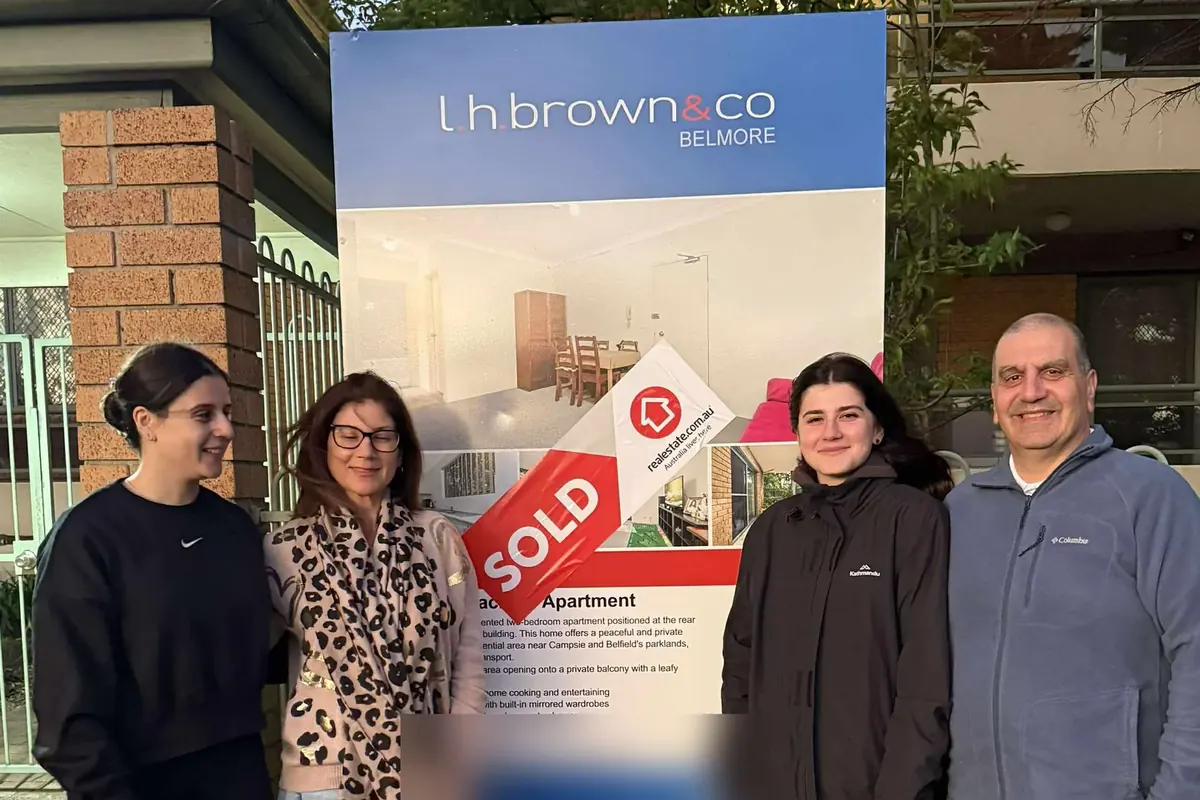
  • Three Links Property Finance clients in front of the agent’s board at the home they bought Family buy · South West Sydney
    Bought, and all smiles. A family purchase in Sydney’s south-west.
  • A family in front of the sold sign at the home they bought together Family buy · Inner West
    The whole family turned up. A parents’ guarantee, done properly.
  • Next one

    The next sold sign could be yours.

    A free 30-minute call shows where you stand.

    Book my free call

Your own figure on $80,000

How much could you borrow?

$80,000
None

What moves the number

Choose any that apply. Each shows roughly how much it changes the figure, the way a lender’s assessment would.

$315,000

is an indicative borrowing figure at today’s typical rates. Lenders typically count around 80% of rental income, which is why an investment purchase can lift your number, your real figure comes from a proper assessment.

Confirm your numbers.

Charles Touma, mortgage broker at Links Property Finance

Real outcomes for real borrowers.

★★★★★
Paperwork and finances were never my strong suit. He has made this process as simple and dummy proof for me as humanly possible. This is not the first time I use a mortgage broker, however it was the easiest and most pleasant.
Mikhail Google review
★★★★★
Charles looked after us really well and his knowledge gave us the confidence to purchase our property. He wasn’t pushy and always ensured we felt comfortable with the repayments.
Sandra Google review
★★★★★
Charles went above and beyond to help us secure our home loan. He worked hard to find the best option for us and kept us updated throughout the whole process. His knowledge of the lending market was impressive and he made everything straightforward.
Anthony Google review

What does the worked example show for $80,000, single, no debts?

How a lender turns an $80,000 salary into a loan figure, using our calculator assumptions.

Gross income$80,000. Salary before tax.
Tax and Medicare levyAbout $16,100. Resident rates, no offsets.
Net income per monthAbout $5,320. What lands in the account.
Living expenses allowedAbout $2,330. Lender benchmark for a single adult, scaled to income.

Illustration only. Each lender uses its own expense benchmark, rate and buffer, so two lenders can differ by $50,000 or more on the same income.

Book my free call

Which five things change the $315,000?

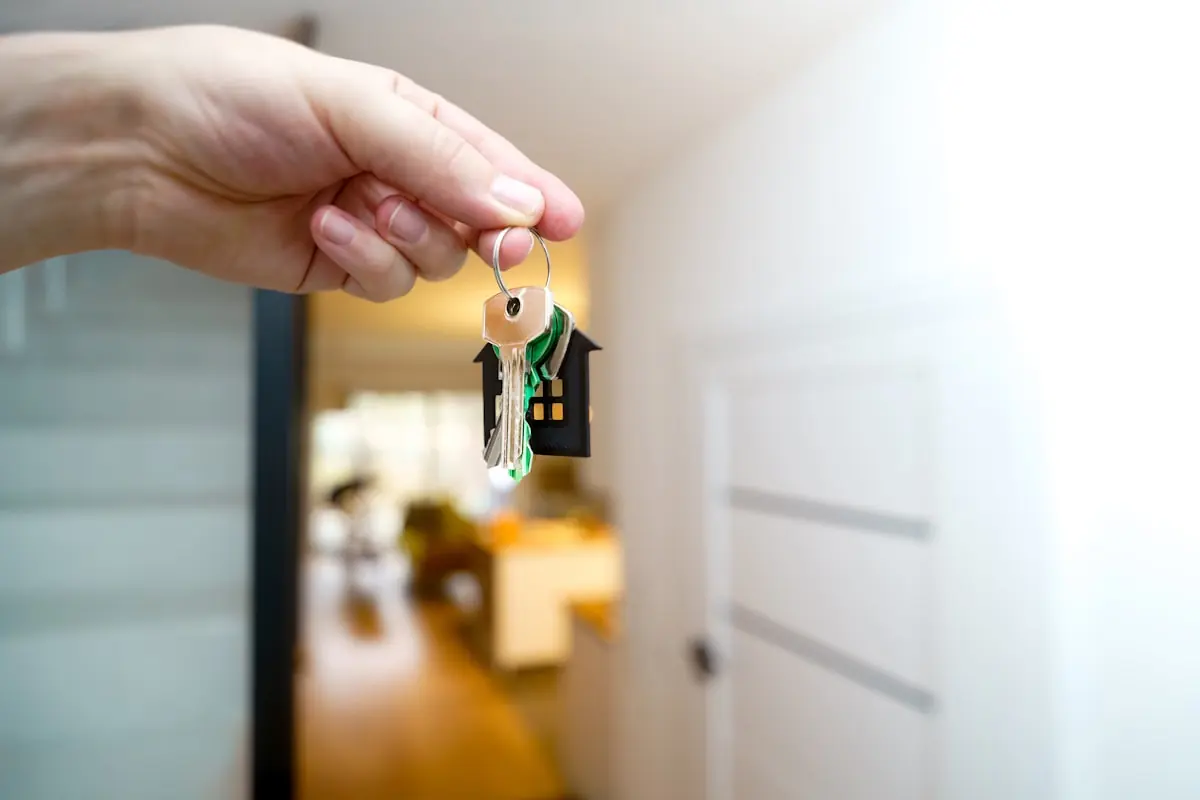
Keys handed over at settlement
  • A second income is the biggest lever.Two people on $80,000 each are assessed on about $160,000 combined. On the same assumptions that is roughly $685,000 of borrowing power, because the second income is taxed separately and living costs do not double.
  • A car loan or a credit card limit cuts it fast.A $500 a month car repayment on an $80,000 income takes about $55,000 off the loan. A $10,000 credit card limit is assessed as if it were fully drawn, whether you use it or not.
  • HECS or HELP debt reduces net pay.Compulsory repayments come out before the lender sees the money. On $80,000 that is about $130 a month in 2026–27, which can mean around $15,000 less borrowing.
  • Rent counts in your favour if you are buying your first home.A clean rent record shows you can carry a repayment. Some lenders use it to accept a smaller savings history, and the 5% Deposit Scheme removes LMI on a deposit as small as 5%.
  • Lender choice matters more at this income than at higher ones.Lenders set different expense floors and treat overtime, allowances and casual income differently. On $80,000 the difference between the most and least generous lender can be the difference between a one-bedroom and a two-bedroom.
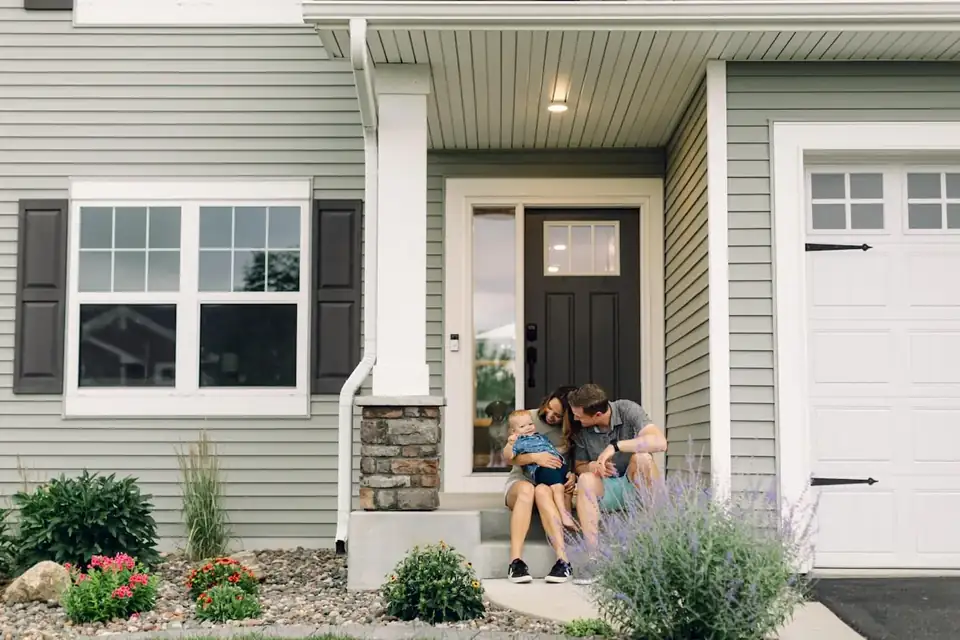
A family on the porch of their home

What does $315,000 of borrowing mean for the purchase price?

The loan is only part of the price. With a 5% deposit under the 5% Deposit Scheme, $315,000 of borrowing supports a purchase of roughly $330,000 plus costs. With a 20% deposit, the same loan supports about $395,000.

Neither reaches a median Sydney apartment, which is why most single buyers on $80,000 either buy further out, buy with a partner, use a guarantor, or save longer and let a pay rise do some of the work.

Stamp duty is the other number. In NSW a first home buyer pays no transfer duty on a home up to $800,000 and a reduced amount up to $1 million, so at this price range the duty bill is usually nil. The NSW stamp duty calculator shows the figure for any price.

How do three $80,000 scenarios compare?

The same salary, three different outcomes on our assumptions.

  • Single, no debts, $25,000 savedAbout $315,000 of borrowing. A 5% deposit covers a $330,000 purchase under the scheme; the real limit is what the deposit will stretch to.
  • Single with a $500 a month car loanAbout $265,000. Clearing the car loan before applying is often worth more than a year of extra saving.
  • Couple, $80,000 each, $60,000 savedAbout $685,000 combined. A 5% deposit on a $680,000 apartment is $34,000, and the scheme means no LMI.

Common questions about borrowing on $80,000

How does a single buyer on $80,000 buy outside Sydney?

An illustrative single nurse on $80,000 with no debts can borrow about $315,000 on our calculator assumptions. That is a small loan for Sydney, so this buyer moves to a regional town and buys a one-bedroom unit priced at $330,000.

Outside Sydney and the large regional centres, the 5% Deposit Scheme’s price cap is $800,000, so the unit qualifies.

The deposit is $16,500 from savings built over two years, the loan is $313,500 and there is no lenders mortgage insurance. As a first home under $800,000, there is no transfer duty either.

The repayment is about $1,880 a month, and the lender tests it at about $2,520. If regular shift penalties are counted, a nurse can often borrow more; see healthcare professional home loans. This is an illustrative example, not a Links client: figures are rounded, at the 6% example rate over 30 years.

How much can I borrow on $80k a year?

Roughly $315,000 as a single applicant with no debts on our calculator assumptions. Lenders vary, and a second income, a smaller expense benchmark or a lower assessment rate can push the figure higher. A car loan, credit card limits or HECS debt pull it down.

How much house can I afford on $80,000?

With a 5% deposit and the 5% Deposit Scheme, about $330,000. With a 20% deposit, about $395,000. The deposit, not the income, is usually the binding limit at this salary.

Can I buy a home on $80,000 in Sydney?

Yes, in outer suburbs or regional NSW, or with a partner, guarantor or gifted deposit; on one income it is difficult inside the inner ring. Many of Charles’s first home buyers on this income bought with a partner or with a parent as guarantor.

Does a guarantor increase how much I can borrow?

No. A guarantor covers the deposit shortfall, so you can buy without LMI and with less cash. The loan still has to be serviced by your income, so the $315,000 figure does not change.

What is the assessment rate and why is it 3% higher?

Lenders test whether you could still pay the loan if rates rose by 3 percentage points. You are assessed at about 9% in this example even though you would pay 6%. It is the single biggest reason borrowing power feels low.

Will a pay rise to $90,000 change much?

Yes: on our assumptions it adds roughly $50,000 to $55,000 of borrowing power, because almost all of the extra income after tax becomes surplus.

Use the borrowing power calculator with your own figures, then the deposit calculator to see what the loan supports at your deposit.

Get a straight answer for your situation

Charles runs your income, expenses and deposit through the lenders that treat an $80,000 earner best, and tells you the price range you can bid in. Free, no credit check.

Prefer a callback?

Charles Touma, mortgage broker at Links Property FinanceCharles calls back within one business day. No documents needed yet.

A family in front of the sold sign at the home they bought together
Charles Touma, mortgage broker at Links Property Finance
Reviewed by Charles Touma Director & Mortgage Broker · MFAA member · Credit Representative 579003 under ACL 389328 About Charles · First home buyers · MFAA register · ASIC register · Complaints processEvery page is reviewed by Charles before it is published and checked against current lender policy and the official scheme pages linked where figures appear.

General information only, not credit or financial advice. The figures are illustrations built on stated assumptions, not a quote or an assessment of your position. Lender policy, rates and assessment rules change and differ between lenders. Links Property Finance holds an Australian Credit Licence authorisation and can assess your actual borrowing power.

Official sources for the figures on this page: Revenue NSW, First Home Buyers Assistance Scheme · Housing Australia, 5% Deposit Scheme. Scheme rules change; the official pages are the final word. Checked against these sources on 12 October 2026.