

Call Charles Book a meeting
Borrowing power

Links Property Finance · Home loans for first home buyers: How Much Can I Borrow on $150k?

A single applicant on $150,000 with no debts reaches about $685,000 on our calculator assumptions. Above $135,000 each extra dollar is taxed at 37 cents, so the figure grows more slowly than the salary from here.

Reviewed by Charles Touma Updated 18 October 2026

$0broker fee on most loans
5.0from 32 Google reviews
70+lenders on our panel
Charles Touma, mortgage broker at Links Property Finance

Charles Touma Sydney mortgage brokerYou deal directly with Charles.

Book a free call

How much can you borrow on $150,000 a year?

At $150,000 the arithmetic changes shape. Income above $135,000 is taxed at 37 cents in the dollar, so the net gain from each pay rise shrinks, while the living expense benchmark a lender applies keeps rising with income.

Read more

The result on our assumptions is about $685,000 of borrowing for a single applicant, and roughly $1.06 million for a couple on $150,000 and $80,000. At this level lender policy on bonuses, rental income and large loan sizes matters more than the headline rate.

Part of the first home buyer loans guide.

A child in a lavender garden

Recent Links clients

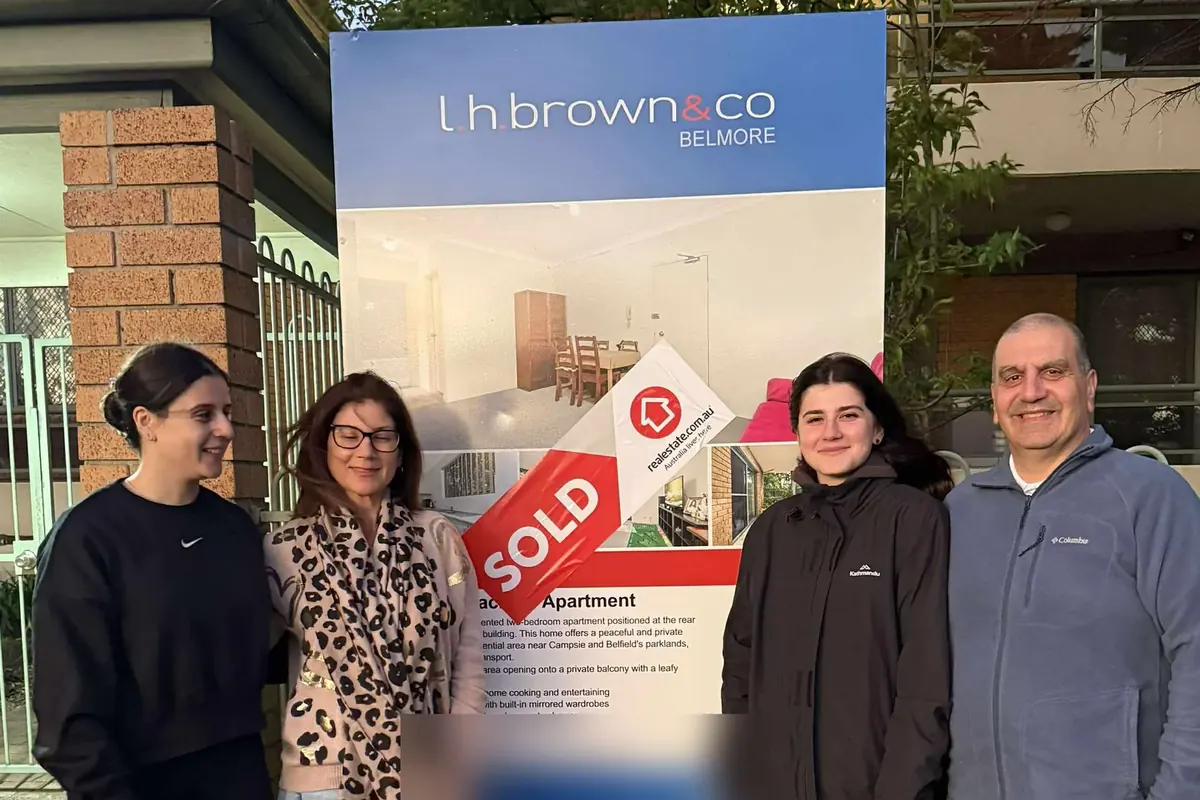
  • Three Links Property Finance clients in front of the agent’s board at the home they bought Family buy · South West Sydney
    Bought, and all smiles. A family purchase in Sydney’s south-west.
  • A family in front of the sold sign at the home they bought together Family buy · Inner West
    The whole family turned up. A parents’ guarantee, done properly.
  • Next one

    The next sold sign could be yours.

    A free 30-minute call shows where you stand.

    Book my free call

Your own figure on $150,000

How much could you borrow?

$150,000
None

What moves the number

Choose any that apply. Each shows roughly how much it changes the figure, the way a lender’s assessment would.

$685,000

is an indicative borrowing figure at today’s typical rates. Lenders typically count around 80% of rental income, which is why an investment purchase can lift your number, your real figure comes from a proper assessment.

Confirm your numbers.

Charles Touma, mortgage broker at Links Property Finance

Real outcomes for real borrowers.

★★★★★
Charles at Links Property Finance made buying our first home so much easier than we expected. As first home buyers, we had a lot of questions around borrowing capacity, our deposit and the different government schemes available to us. Charles explained everything clearly, compared different lenders and kept us updated throughout the whole process. He was always easy to reach and made sure we understood what was happening from pre approval right through to getting our home loan approved. We would definitely recommend Links Property Finance to anyone looking for a mortgage broker, especially first home buyers who want someone to guide them through the process.
Michael Google review
★★★★★
Had a great experience with Charles at Links Property Finance. He made the whole home loan process straightforward and easy to understand, kept me updated throughout and was always quick to answer any questions.
Louie Google review
★★★★★
I found Charles and Links Property Finance very prompt and professional to deal with. Made it all so easy.
Marg Google review

What does the worked example show for $150,000, single, no debts?

From salary to loan figure on our calculator assumptions.

Gross income$150,000. Salary before tax.
Tax and Medicare levyAbout $39,600. Resident rates, 37% above $135,000.
Net income per monthAbout $9,200. After tax.
Living expenses allowedAbout $2,720. Single adult benchmark, scaled to income.
Surplus for repaymentsAbout $5,510. 85% of what is left.
Assessment rate9%. 6% example rate plus the 3% buffer.
Borrowing powerAbout $685,000. Serviced by $5,510 a month at 9% over 30 years.
Repayment at 6%About $4,110 a month. The actual repayment at the example rate.

Illustration only. Lender benchmarks and buffers differ, and some lenders apply a higher expense floor to higher incomes.

Book my free call

What moves the $685,000?

An outdoor table on a timber deck
  • Bonus and commission policy can be worth $25,000 of borrowing.Taking 80% of a $30,000 bonus against 100% is a $6,000 a year difference in assessed income. On $150,000 incomes, bonus-heavy roles should be matched to lenders that count the bonus in full with two years of history.
  • Investment property rent adds, after the haircut.Lenders count 70 to 80% of rent and assess the investment loan at the buffered rate. A property that is positively geared in real life can still reduce borrowing power on paper.
  • Private school fees and childcare are counted.Lenders ask for them and include them as commitments. On a $150,000 income they are the most common reason the actual figure comes in under the calculator.
  • Large loans attract their own policy.Many lenders cap loans above $1 million at lower loan-to-value ratios or ask for a bigger deposit, which is why a couple at this income often needs 15% to 20% down for a $1.3 million house.
  • A trust or company income is assessed differently.If part of the $150,000 is distributions or director’s fees, the lender wants two years of financials and may average them. That is the self-employed lending playbook, even for salaried directors.
A couple sitting among moving boxes

How do you get from the loan to the purchase price?

A $685,000 loan with a 10% deposit supports a purchase near $760,000, which sits under the $800,000 NSW first home buyer duty exemption. With 20% down it supports about $855,000, where a first home buyer pays reduced duty up to $1 million.

A couple at $1.06 million of borrowing with a 20% deposit is looking at roughly $1.3 million.

Above $1 million, stamp duty for a first home buyer returns to the standard scale and the 5% Deposit Scheme cap of $1.5 million in Sydney becomes the relevant limit. The stamp duty calculator and the buying cost calculator show the full cash needed at each price.

How do three $150,000 scenarios compare?

Same salary, different outcomes on our assumptions.

  • Single, no debtsAbout $685,000. A house in the middle ring with a 20% deposit, or an apartment closer in.
  • Single, $30,000 bonus, lender counts 100%About $825,000 at a lender that takes the full bonus; about $800,000 at one that takes 80%.
  • Couple, $150,000 and $80,000, two childrenAbout $960,000 after the dependant allowance, against $1.06 million with no children.

Common questions about borrowing on $150,000

How does a family guarantee work for a single buyer on $150,000?

An illustrative single engineer on $150,000 with no debts can borrow about $685,000 on our calculator assumptions, but has only $15,000 saved.

Their parents offer a limited guarantee secured on their own home, so with some lenders the loan can cover the full price of a $670,000 three-bedroom townhouse in a north-western suburb plus about $10,000 of costs.

The guarantee covers the part of the loan above 80 per cent of the price, so there is no lenders mortgage insurance, and it can be released once the loan falls or the value rises.

As a first home under $800,000, there is no transfer duty. The $15,000 stays in an offset account as a buffer. See guarantor home loans.

The $680,000 loan costs about $4,080 a month, and the lender tests it at about $5,470. This is an illustrative example, not a Links client: figures are rounded, at the 6% example rate over 30 years.

How much can I borrow on $150k?

About $685,000 as a single applicant with no debts on our calculator assumptions. Bonus policy, rental income and dependants move it more at this income than at lower ones, and lenders differ by $100,000 or more.

Why does $150,000 not borrow double what $75,000 does?

Tax. Income above $135,000 is taxed at 37 cents, so the net income grows more slowly than the gross, and the lender’s expense benchmark rises with income too.

How much can a couple on $150k and $80k borrow?

Roughly $1.06 million on the same assumptions with no dependants and no debts. Each child and each car loan reduces it.

Can I borrow $1 million on $150,000?

Not as a single applicant on our assumptions, which reach about $685,000. With a partner’s income, rental income from an existing property, or a lender that counts bonus income in full, $1 million becomes possible.

Do lenders cap loans over $1 million?

Many do: they apply lower maximum loan-to-value ratios above $1 million or $1.5 million, and some require a larger deposit or a second valuation. The large home loans guide covers the policies.

Should I pay off my investment loan to borrow more?

Rarely. The rent counts in your favour, and reducing deductible debt to increase non-deductible debt is usually the wrong order. Structure and lender choice solve it more often than repayment does.

Try the borrowing power calculator with your bonus, rent and commitments, and read how lenders assess large loans.

Get a straight answer for your situation

Charles runs your income, commitments and deposit through the lenders that suit a $150,000 earner, including the ones that count bonus and rental income in full. Free, no credit check.

Prefer a callback?

Charles Touma, mortgage broker at Links Property FinanceCharles calls back within one business day. No documents needed yet.

A family in front of the sold sign at the home they bought together
Charles Touma, mortgage broker at Links Property Finance
Reviewed by Charles Touma Director & Mortgage Broker · MFAA member · Credit Representative 579003 under ACL 389328 About Charles · First home buyers · MFAA register · ASIC register · Complaints processEvery page is reviewed by Charles before it is published and checked against current lender policy and the official scheme pages linked where figures appear.

General information only, not credit or financial advice. The figures are illustrations built on stated assumptions, not a quote or an assessment of your position. Lender policy, rates and assessment rules change and differ between lenders. Links Property Finance holds an Australian Credit Licence authorisation and can assess your actual borrowing power.

Official sources for the figures on this page: Revenue NSW, First Home Buyers Assistance Scheme. Scheme rules change; the official pages are the final word. Checked against these sources on 12 October 2026.