
Green Home Loans: Discounts for Energy-Efficient Homes
Green home loans in Australia: some lenders discount the rate for 7-star homes or fund solar and batteries cheaply. What qualifies in NSW.
 Charles Touma
4 min read
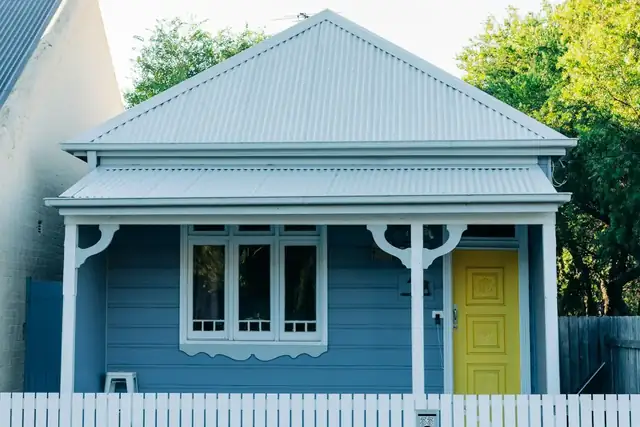
A green home loan is a home loan with a lower rate, or a cheap add-on loan, for an energy-efficient home or for solar panels, batteries and similar upgrades. Some lenders offer discounts for homes rated 7 stars or more under NatHERS. In NSW, most new homes since 1 October 2023 must meet an average of 7 stars, so many new builds already qualify.
| Type | What it usually covers |
|---|---|
| Discounted home loan | A lower rate for a home meeting an energy rating, often for a set period |
| Green add-on or personal loan | Solar panels, batteries, heat pumps, insulation |
| Construction loan discount | Building to a high energy rating |
| Government battery discount | Cheaper Home Batteries Program, from 1 July 2025 |
What makes a home qualify?
Lenders usually use the NatHERS star rating, the national scale for a home’s thermal performance, often requiring 7 stars or more, sometimes with solar panels as well. Since 1 October 2023, NSW BASIX standards require most new homes to meet the equivalent of an average 7-star rating, except in some north-eastern climate zones and for apartment buildings of up to five storeys. You need the certificate for the home to show the lender.
How big are the discounts?
They vary and change. Some green loans backed by the Clean Energy Finance Corporation have offered rate discounts of around 0.4 percentage points for up to five years. A discount for a limited time is worth comparing against the lender’s ongoing rate, because a lower rate elsewhere can still be cheaper overall.
How do you fund solar and batteries?
- A green add-on loan from your lender, sometimes at a low rate.
- Equity in your home, through a split with a short repayment period.
- The Cheaper Home Batteries Program, which from 1 July 2025 provides a discount of around 30% on a typical installed battery through small-scale technology certificates, reducing over time to 2030.
Keep any borrowing for upgrades on a short repayment period; the article on using your home loan for a big purchase shows why the term matters.
Do green features change your borrowing power?
Not directly. Lenders still assess your income and expenses in the usual way. Lower energy bills can mean lower actual living costs, but most lenders use a benchmark for living costs rather than your power bill. The main benefit is the rate and the running costs.
Should you choose a lender for its green discount?
Only if the whole loan is competitive. Compare the rate after the discount ends, the fees, the features you need such as an offset, and how the lender treats your income. The comparison rate guide explains how to compare total cost.
A worked example
A family builds a new home in Sydney’s north-west that meets the 7-star BASIX standard and has solar panels. One lender offers a green discount for five years; another offers a lower standard rate with no discount. Over the first five years the green loan is cheaper, but after that the other lender’s rate is lower. With an offset and a plan to keep the loan for ten years or more, the family compares the total cost over that period rather than the headline discount.
Questions people ask
What is a green home loan?
A home loan with a discount or cheap finance for energy-efficient homes and upgrades such as solar and batteries.
Do new homes in NSW qualify for green loans?
Many do, because most new NSW homes must meet an average 7-star rating. Each lender sets its own criteria.
Can I add solar panels to my home loan?
Usually, through a top-up, a split or a green add-on loan. Keep the repayment period short.
Charles Touma compares green discounts against the best ongoing rates, so you choose on total cost. A free 30-minute call covers it. General information only, not credit advice; lender policies change and every loan is subject to the lender’s assessment.
Sources: NSW Planning, BASIX sustainability standards; CEFC, green home loans; Clean Energy Regulator, Cheaper Home Batteries Program, checked 18 October 2026.
General information only, not credit, legal or tax advice. Your situation is assessed properly before any recommendation. Government scheme details change; figures are current at the time of writing.
Talk it through with Charles
A free 30-minute call: your borrowing power, deposit options and the next step.