

Links Property Finance · Home loans for first home buyers: Questions to Ask Before Making an Offer
By the time you are ready to offer, the emotional work is done and the questions get skipped.


What should you ask before making an offer?
Ask the agent about the vendor’s timing and other offers, your solicitor about the contract, strata or building reports and special conditions, and yourself whether the price leaves room for stamp duty, costs and a buffer.
Read more
The finance question most buyers skip is whether the lender will value the property at the price you offer.
Part of the first home buyer loans guide.

Recent Links clients, including first home buyers
-

Sold. Her first home. Deposit, scheme and lender, sorted. -
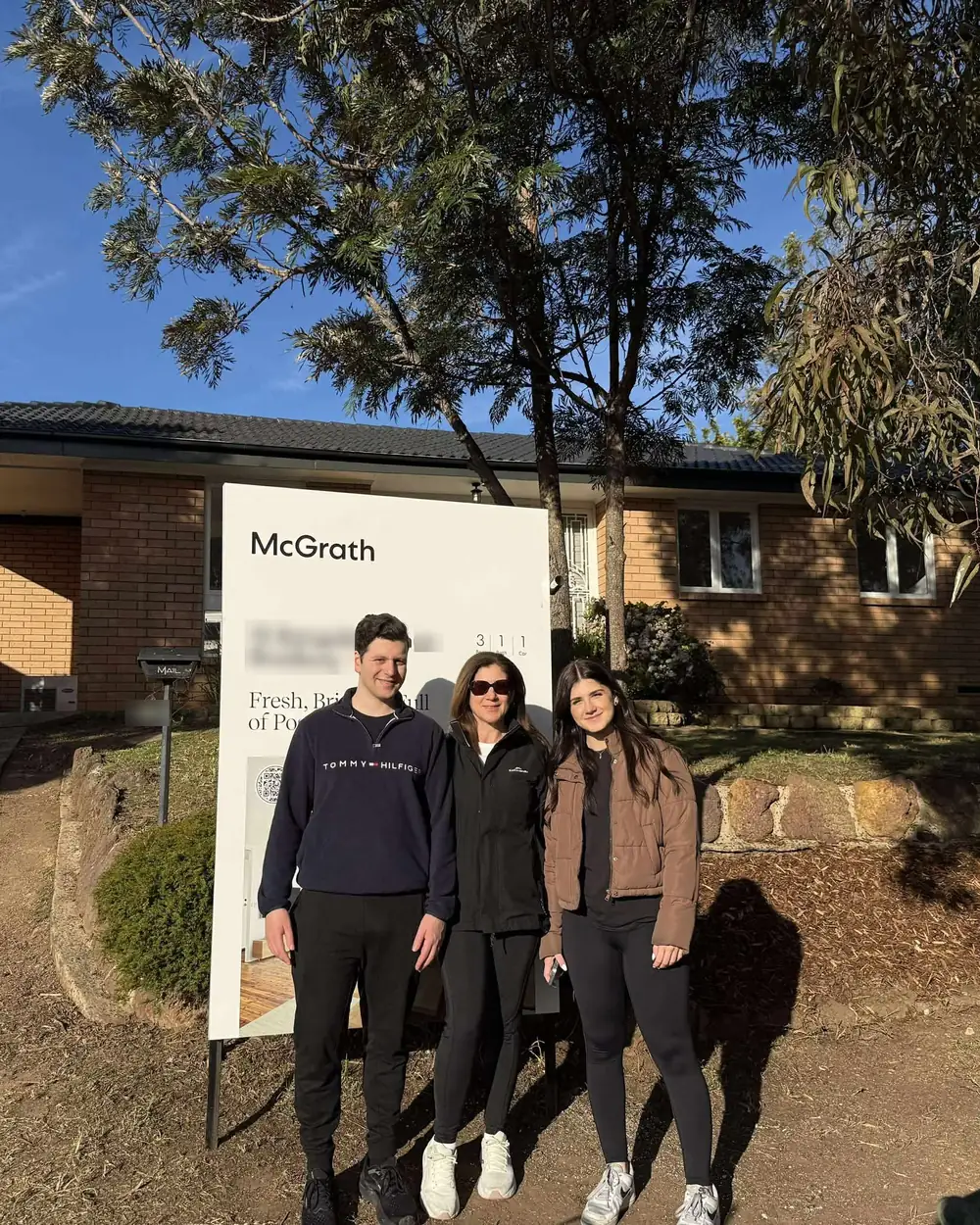
Bought, and all smiles. A family purchase in Sydney’s south-west. -
Next one
Your sold sign could be next.
One short call tells you what you can borrow and what to do first.
Book my free call


How much could you borrow?
How much could you borrow?
What moves the number
Choose any that apply. Each shows roughly how much it changes the figure, the way a lender’s assessment would.
is an indicative borrowing figure at today’s typical rates. Lenders typically count around 80% of rental income, which is why an investment purchase can lift your number, your real figure comes from a proper assessment.
Confirm your numbers.
I have had a number of dealings with Charles from Links Property Finance. He is very knowledgeable, thorough, and detailed with his advice. Importantly, he is very approachable and easy to deal with. His advice has been beneficial to myself and my acquaintances. I highly recommend him.
Had a great experience with Charles. He made the home loan process straightforward, was always easy to communicate with, and really knew his stuff. Would definitely recommend Charles and the team!
Had a great experience with Charles at Links Property Finance. He made the whole home loan process straightforward and easy to understand, kept me updated throughout and was always quick to answer any questions.
- Ask the agent
- Why is the vendor selling, and what is their timeline?It tells you whether a longer or shorter settlement helps you, and whether price is the only lever.
- How long has it been on the market?A recently listed property and one that has been passed in twice are different negotiations.
- Have there been offers, and what happened to them?Agents will not always answer fully, but the answer or the hesitation is informative.
- What is included in the sale?Appliances, fixtures, window coverings. Get it into the contract rather than the conversation.
- Are there any known issues or works planned?On strata, ask directly about special levies, defects and upcoming major works.
- Ask your solicitor or conveyancer
- Is there anything unusual in the contract?Special conditions, sunset clauses on off-the-plan, easements, covenants or unapproved works.
- What does the title show?Encumbrances, caveats and any restriction on how the property can be used or altered.
- For strata, what does the record say?Sinking fund balance, levy history, minutes referring to defects, and the ratio of owner-occupiers to renters.
- Can we negotiate the cooling-off period or conditions?On private treaty there is usually more flexibility than buyers assume.
- Ask about the property itself
- What did the building and pest inspection find?Findings become a price adjustment or a first-year budget. They are rarely a reason to walk, and always a reason to know.

- How does this property type finance?Studios under 50 square metres, company title, off the plan and unusual construction all carry lender restrictions. Ask before you commit, not after.
- What are the ongoing costs?Council rates, water, strata levies and insurance. They belong in your budget alongside the repayment.
- Ask yourself
- Is my finance ready for this specific property?Pre-approval covers you; it does not cover every property. Valuation and property-type policy still apply.
- What is my actual ceiling, and did I set it calmly?Write it down before the day. Auction rooms are designed to move that number.
- What happens if the valuation comes in under the price?The gap is yours to fund. If that would break you, the bid ceiling needs to come down. What happens when a valuation lands low.
- Am I buying unconditionally?At auction, yes: no cooling-off and no finance clause. Every question above should be answered before Saturday, not after.
- Would I still want this in five years?Buying costs are heavy and spread thin only over time. A property you would leave in eighteen months is an expensive purchase whatever the price.
This is a due diligence checklist, not legal advice. Your solicitor or conveyancer reviews the contract and title, and a building inspector assesses the property. What we can tell you is how the property and your position will be read by a lender.
Common questions about offer and auction
What is the difference between offering and bidding?
A private treaty offer can usually carry conditions and a cooling-off period applies in NSW unless waived. An auction bid is unconditional: contracts exchange on the fall of the hammer with no cooling-off and no finance clause.
That difference changes how much preparation is required beforehand. The NSW buying process sets out each step from offer to settlement.
Can I make an offer subject to finance?
On private treaty, commonly yes, and it is worth doing where your finance is not fully settled. At auction it is not available. Vendors weigh conditions against price, so an unconditional offer sometimes wins at a lower number than a conditional one.
Should I get a building inspection before offering?
For auction, yes, because there is no opportunity afterwards. For private treaty you may be able to make the offer conditional on it. Either way the cost is small relative to what it can reveal.
What if I win the auction and finance falls through?
You are contractually bound, and the deposit is at risk along with potential further liability. This is why unconditional bidding requires settled finance and a buffer for a conservative valuation, rather than optimism.
How do I know the price guide is realistic?
Compare recent sales of similar properties rather than relying on the guide alone. Your own research, and where you have one, a buyer's agent, are better indicators. Guides are a marketing tool as much as an estimate.
Get advice on questions to ask before making an offer
Charles can confirm your finance covers this specific property, and flag valuation risk before you raise your hand. Free, no credit check.
Prefer a callback? Charles calls back within one business day. No documents needed yet.





General information only, not credit or financial advice. Lender requirements and government scheme criteria differ and change over time; your position is confirmed in a full assessment.
Official sources for the figures on this page: Revenue NSW, transfer duty. Scheme rules change; the official pages are the final word. Checked against these sources on 12 October 2026.